
Talk to Us
+86 13633281999
Email Address
ada@xingxinwiremesh.com
Talk to Us
+86 13633281999
Email Address
ada@xingxinwiremesh.com
Selecting a high-performance filtration or conveyance system often hinges on a single critical component: the mesh. In industrial environments where corrosion resistance and structural integrity are non-negotiable, the search for reliable ss wire mesh suppliers becomes a strategic priority for procurement managers and engineers alike.
The complexity of stainless steel wire mesh lies in the intersection of metallurgy and weaving precision. From microscopic filter cloths to heavy-duty crimped screens, the variance in aperture size and wire gauge dictates whether a system will operate at peak efficiency or succumb to premature failure. Understanding the technical nuances of these materials is essential for optimizing industrial workflows.
This analysis examines the technical benchmarks for evaluating mesh quality, the operational advantages of specialized designs like honeycomb structures, and the logistical frameworks necessary to ensure long-term supply chain stability in the metal products industry.


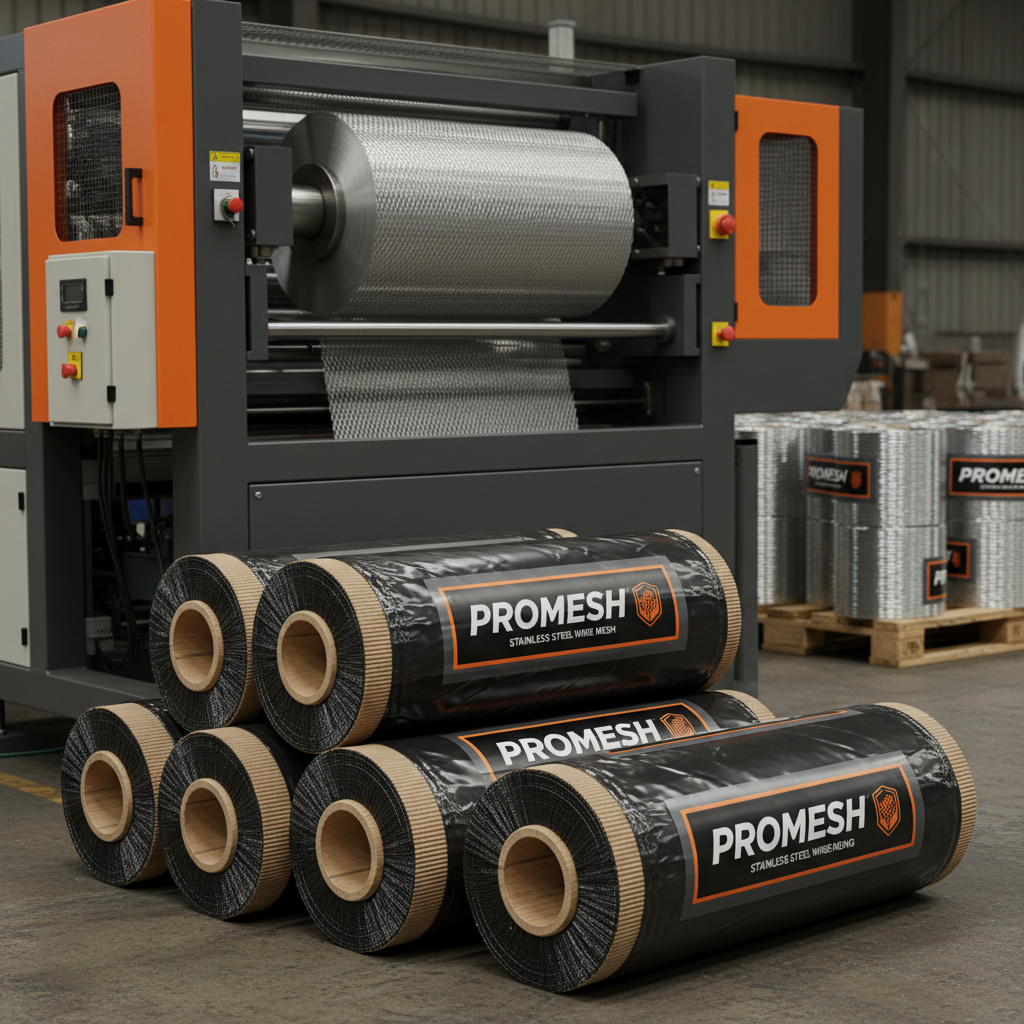
Industrial mesh production has shifted from basic manual weaving to highly integrated operations involving wire drawing, precision weaving, and specialized spraying. This vertical integration allows manufacturers to control the molecular integrity of the wire before it ever hits the loom, reducing inconsistencies that lead to structural weak points.
Modern facilities, such as those operated by Anping Xingxin Metal Mesh Co., Ltd., utilize hundreds of weaving machines and annealing furnaces to ensure that the steel reaches the optimal balance of hardness and ductility. This technical foundation is what separates generic mesh from engineering-grade components used in aerospace and chemical processing.
Evaluating the quality of stainless steel mesh requires a focus on aperture consistency and tensile strength. In filtration applications, even a micron-level deviation in the weave can result in contaminant breakthrough, compromising the entire production batch. This is why rigorous quality control procedures and detailed analysis are mandatory for components destined for the electronics or pharmaceutical sectors.
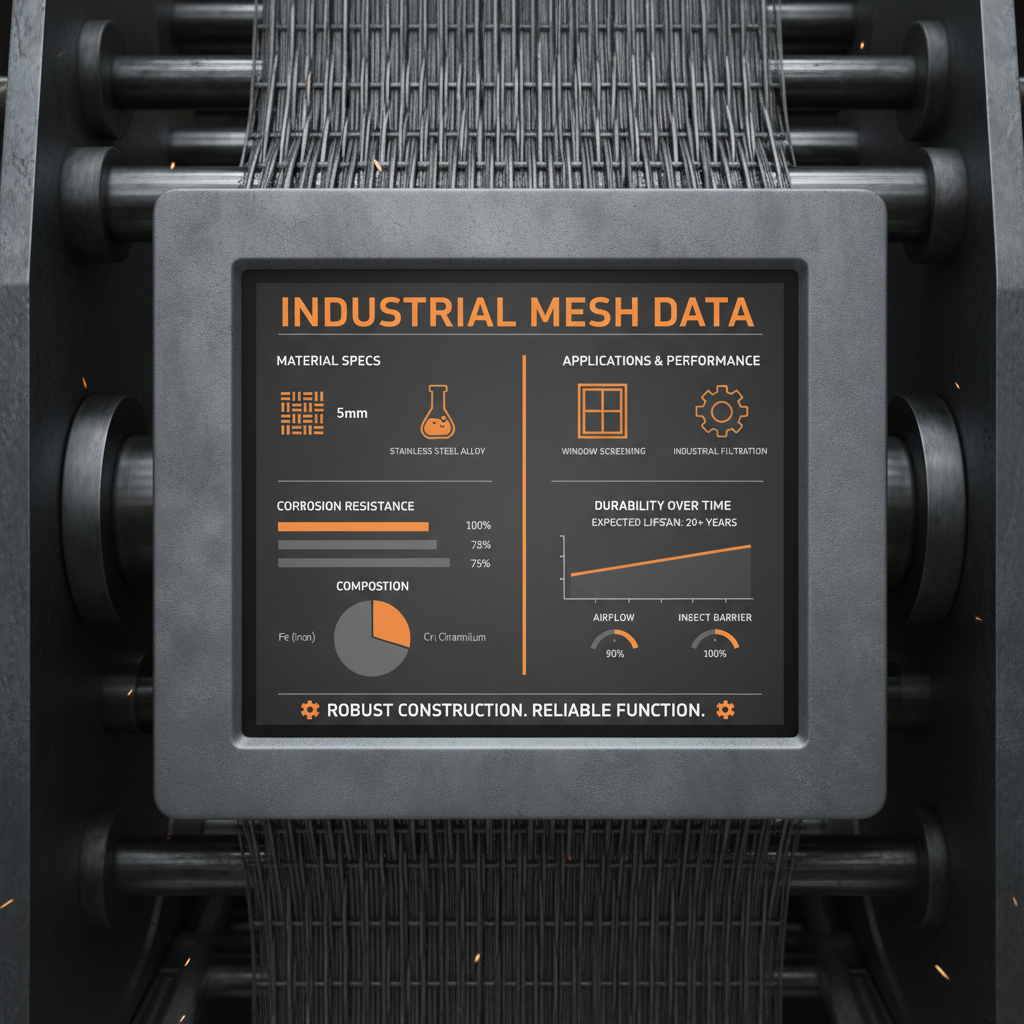
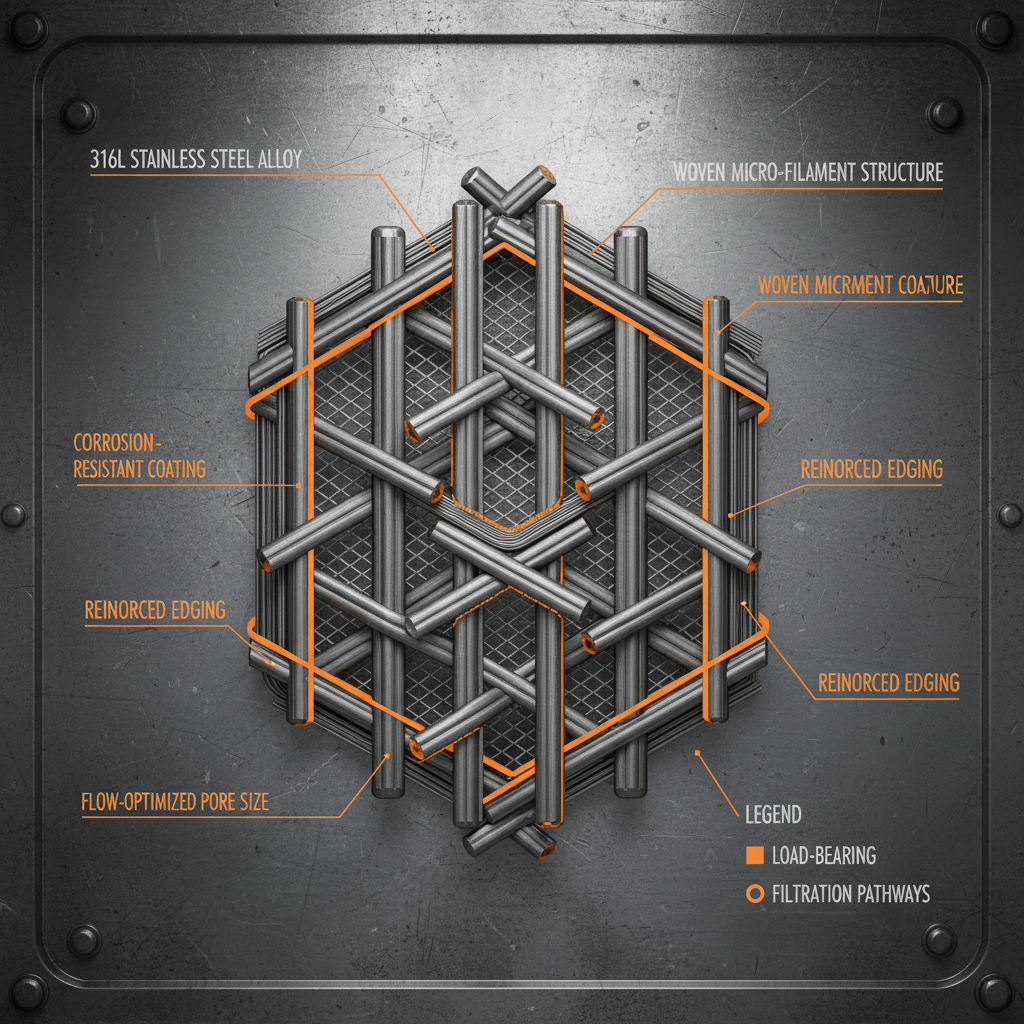
Furthermore, the choice of stainless steel grade (e.g., 304 vs 316L) significantly impacts the product's longevity in corrosive environments. The interaction between the chemical composition of the wire and the operating temperature determines the rate of oxidation and the overall lifecycle of the screen.
Beyond material grade, the weaving technique—whether plain, twill, or dutch weave—determines the open area percentage. A higher open area generally translates to better flow rates but may sacrifice some mechanical strength, requiring a precise trade-off based on the specific industrial requirement.
When durability must coexist with a high degree of transparency or flow-through, the honeycomb conveyor belt emerges as a primary solution. Unlike traditional linear weaves, the hexagonal geometry of the honeycomb design distributes mechanical stress more evenly across the surface, preventing localized deformation under heavy loads.
The high strength-to-weight ratio of honeycomb mesh allows for significant energy efficiency gains by reducing the motor load required to move the belt while maintaining a completely flat carrying surface.
Operationally, these belts offer up to 81% open area, which is critical for applications involving washing, drying, or cooling where maximum airflow or liquid drainage is required. Additionally, the ability to use welded button edges or clinched edges ensures that the belt maintains tracking precision without requiring specialized tools for installation.
The operational cost of industrial conveyors is heavily influenced by the weight and friction of the belt material. Transitioning to high-strength, low-weight mesh solutions reduces the inertia of the system, leading to lower electricity consumption and reduced wear on drive components.
When comparing traditional steel belts to optimized honeycomb designs, the difference in "effective weight" becomes a key performance indicator. A lighter belt that does not compromise on load-bearing capacity allows for faster acceleration and deceleration cycles, increasing overall throughput.
In chemical processing plants, the use of special material wire mesh is critical to prevent catalyst loss and ensure precise separation. For instance, a manufacturer evaluating a filtration system for acidic environments would prioritize 316L stainless steel over 304 to avoid pitting corrosion.
In the transportation and aerospace sectors, mesh is often utilized for acoustic control and reinforcement. The ability of ss wire mesh suppliers to provide tailored specifications—from the finest Micronics filter cloth to heavy crimped screens—allows these industries to meet stringent safety and performance standards.
The industry is moving toward "intelligent mesh" where material properties are tuned at the microscopic level to repel specific contaminants or enhance thermal conductivity. We are seeing a shift from general-purpose screens to application-specific geometries that maximize flow while minimizing pressure drops.
Sustainability is also driving innovation. The demand for belts with "twice the life of competitive belts" is no longer just about cost—it is about reducing the industrial waste stream. Materials that can be easily joined and repaired on-site are becoming the preferred choice for lean manufacturing operations.
As automation increases, the requirement for positive-driven belts with excellent tracking becomes paramount. This reduces downtime caused by belt snagging or misalignment, directly impacting the OEE (Overall Equipment Effectiveness) of the production line.
Choosing between different ss wire mesh suppliers requires a balanced analysis of production capacity and technical support. A supplier with an integrated operation—covering drawing, weaving, and spraying—is generally more reliable than a middleman, as they can guarantee material traceability.
Technical expertise is the second pillar. The ability of a partner to provide guidance on the strength-to-weight ratio or the suitability of a welded versus clinched edge can save a company thousands in potential replacement costs.
Finally, procurement teams should evaluate the "total cost of ownership" rather than the initial price per square meter. A belt that lasts twice as long and requires no special tools for installation provides a significantly higher return on investment over a five-year horizon.
| Requirement | Recommended Mesh | Key Technical Factor | Relative Suitability |
|---|---|---|---|
| High Airflow/Drainage | Honeycomb Mesh | Open Area % (up to 81%) | Optimal |
| Extreme Corrosion | 316L SS Mesh | Molybdenum Content | Optimal |
| Precision Filtration | Micronics Cloth | Wire Gauge Consistency | Optimal |
| Heavy-Duty Sifting | Crimped Screens | Tensile Strength | High |
| Energy Efficiency | Low-Weight SS Mesh | Strength-to-Weight Ratio | High |
| Security/Barrier | Security Window Screen | Impact Resistance | Moderate |
A high-quality supplier is characterized by vertical integration of production processes, including wire drawing, weaving, and finishing. This ensures full control over material purity and dimensional accuracy. Additionally, they should possess an extensive infrastructure—such as a large number of weaving machines and annealing furnaces—to handle diverse specifications from fine filter cloths to heavy-duty industrial screens while maintaining strict international quality standards.
Honeycomb mesh improves efficiency through its superior strength-to-weight ratio, which reduces the energy required to drive the conveyor system. Its unique hexagonal structure allows for up to 81% open area, facilitating excellent flow-through for air or liquids. Furthermore, it provides a flat carrying surface and positive drive tracking, which minimizes belt slippage and reduces the need for frequent manual adjustments or specialized installation tools.
The choice depends on the specific stress profile of the application. Welded button edges generally provide higher structural rigidity and are preferred in high-tension environments where belt stability is critical. Clinched edges may be suitable for lighter applications or where specific flexibility is required. Both designs aim to reduce snagging or catching on conveyor protrusions, but welded options typically offer longer life in heavy-industrial settings.
While both are corrosion-resistant, 316 stainless steel contains molybdenum, which provides significantly better resistance to chlorides and industrial chemicals. For standard food-grade or mild outdoor environments, 304 is often sufficient. However, in marine environments or chemical processing plants, 316 is necessary to prevent pitting and crevice corrosion, ensuring the mesh does not degrade and contaminate the product stream.
Yes, professional manufacturers can customize aperture sizes based on the intended filtration or separation goal. This is achieved by adjusting the wire gauge and the weave density. Whether the requirement is for a micron-level filter for electronics or a heavy-duty screen for mining, the supplier can calibrate the weaving process to meet precise tolerances, provided the material's tensile strength can support the desired open area.
Key indicators include "blinded" apertures where particles are permanently lodged, visible thinning of the wire due to abrasion, or localized sagging in conveyor belts. In stainless steel mesh, the appearance of rust spots (pitting) indicates that the material grade is no longer compatible with the environment. Replacing the mesh before total failure prevents unplanned downtime and protects downstream equipment from contamination.
The selection of stainless steel wire mesh is far more than a simple procurement task; it is an engineering decision that impacts the longevity, safety, and efficiency of industrial operations. By prioritizing suppliers with integrated manufacturing capabilities and a deep understanding of material science, businesses can ensure they receive components that exceed international standards.
As the industry moves toward greater specialization and sustainability, the adoption of high-performance designs like honeycomb belts represents a strategic move toward lower energy consumption and reduced operational waste. The ultimate goal is to create a seamless harmony between material strength and operational flow.