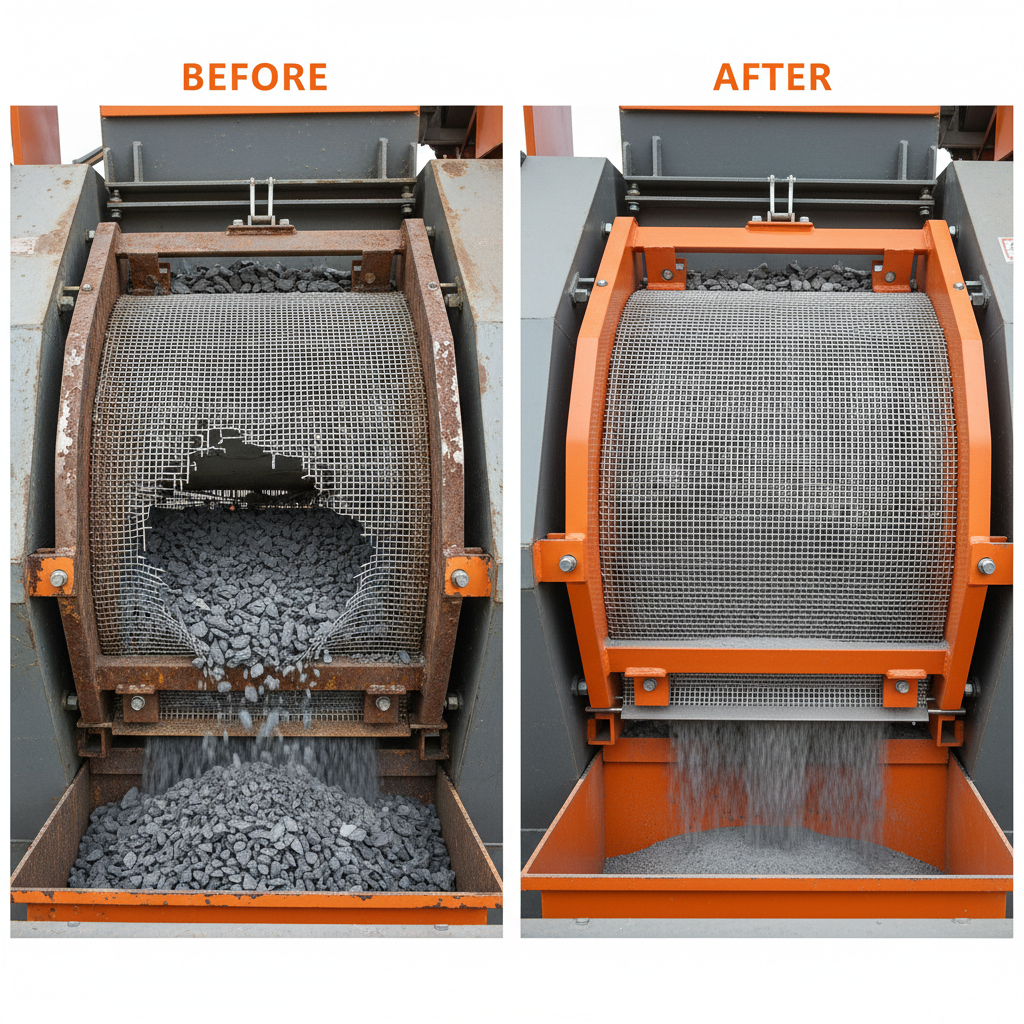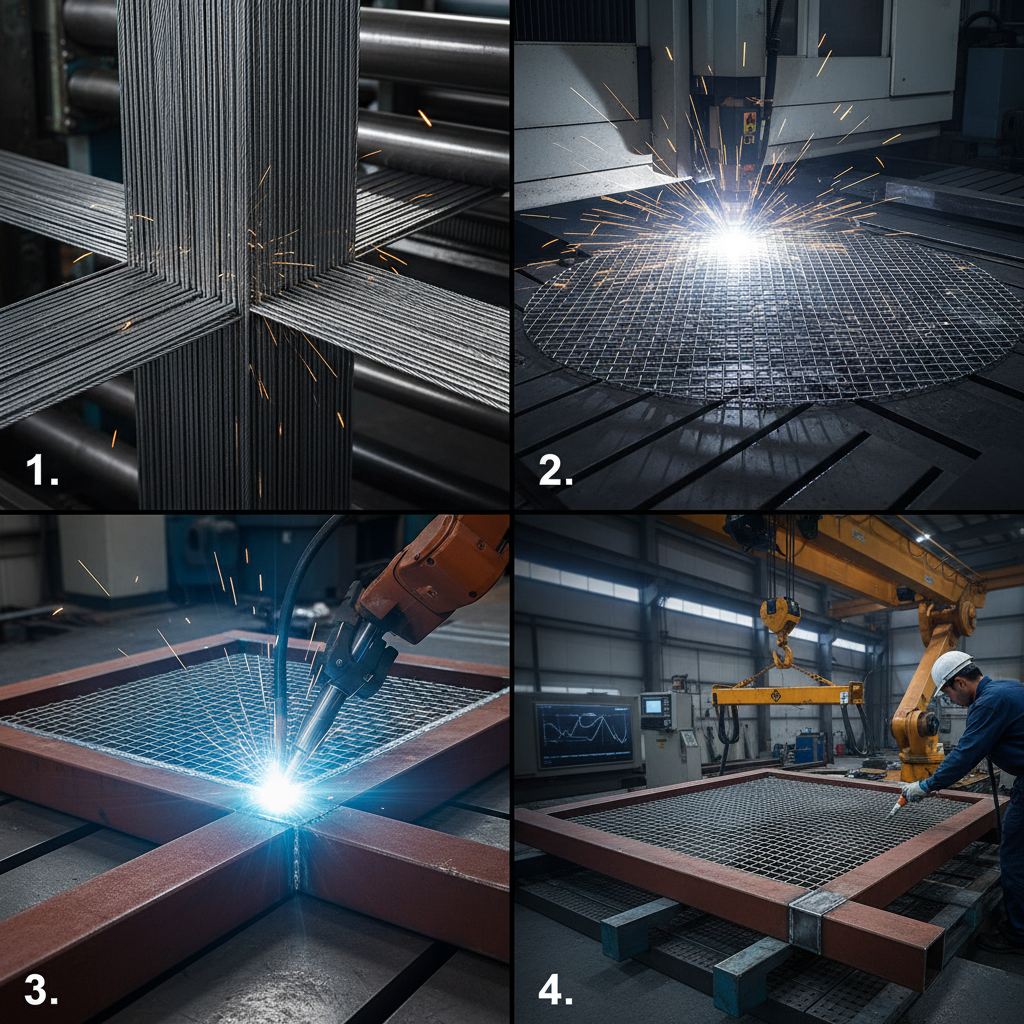


Selecting the right industrial filtering or screening solution often comes down to the precision of the weave and the reliability of the source. For many procurement managers, finding qualified crimped wire mesh manufacturers is not just about price, but about ensuring structural integrity under extreme mechanical stress.
Crimped wire mesh is engineered to provide superior stability and rigidity compared to plain weaves, making it indispensable in heavy-duty industrial applications. The process of crimping the wires creates a mechanical lock that prevents the mesh from shifting or distorting during operation, which is critical for precision separation and filtration.
Whether you are sourcing for aerospace components, chemical processing, or large-scale mining, understanding the technical capabilities of a manufacturer—such as their wire drawing and annealing capacity—is essential for long-term operational efficiency.

Technical Foundations of Crimped Mesh Production

The production of high-quality crimped mesh begins long before the weaving process. It starts with precision wire drawing and controlled annealing to ensure the metal possesses the correct ductility to be bent without fracturing. This foundational step is where the quality of a manufacturer is first tested, as inconsistencies in wire diameter can lead to uneven apertures in the final product.
Modern fabrication involves sophisticated weaving machines that apply specific crimping patterns to the warp and weft wires. By creating these strategic bends, the mesh gains a three-dimensional structure that resists the "opening" effect common in plain weaves when subjected to high pressure or vibration.
For a manufacturer to be truly comprehensive, they must integrate these processes. An integrated operation encompassing drawing, weaving, and surface treatment—such as spraying or powder coating—allows for tighter quality control and the ability to customize the mesh for specific corrosive environments.
Mechanical Advantages of the Crimping Process
The primary mechanical value of crimping lies in the stability of the aperture. In a plain weave, wires can slide over one another under tension, causing the holes to elongate and compromising the filtration accuracy. Crimping creates a permanent mechanical interlock that preserves the geometric shape of each opening.
Beyond stability, crimped mesh offers increased thickness and stiffness. This makes it an ideal choice for applications requiring self-supporting panels or screens that must resist sagging. The added depth of the crimp also provides a better surface for capturing particles in certain separation processes.
Furthermore, the ability to vary the crimping intensity allows manufacturers to produce everything from fine Micronics filter cloths to heavy-duty screens. This versatility ensures that the mesh can be tailored to either prioritize maximum open area or maximum structural durability.
Critical Industrial Applications and Use Cases
In the mining and aggregate industries, crimped screens are the gold standard for vibrating separators. The high-impact nature of these environments would quickly destroy a plain weave; however, the structural reinforcement of crimped wire allows the mesh to absorb energy and resist wear over longer cycles.
In the chemical and pharmaceutical sectors, the focus shifts to corrosion resistance and precision. Stainless steel wire mesh, specifically those with a crimped structure, is used to create filtration baskets and separation screens that must withstand caustic cleaning agents and maintain strict micron ratings.
Additionally, specialized mesh solutions are increasingly found in aerospace and transportation for acoustic control and reinforcement. Here, the mesh must provide a specific balance of airflow and structural strength, often requiring the use of special material wire mesh to handle extreme temperature fluctuations.
Performance Benchmarks for Heavy Duty Screening
When evaluating the performance of industrial mesh, engineers typically look at the trade-off between the open area percentage and the burst strength. While plain weaves may offer a slightly higher open area, they fail significantly sooner when exposed to dynamic impact.
The following data illustrates the relative performance of crimped structures against industry benchmarks in terms of stability and longevity under stress. The "Industry Benchmark" represents standard plain weaves, while the second dataset reflects the enhanced capabilities provided by professional crimped wire mesh manufacturers.
crimped wire mesh manufacturers Performance Metrics
As shown, the most significant gains are seen in aperture stability and impact resistance. This gap in performance justifies the higher initial investment in crimped solutions for high-uptime environments where screen failure leads to costly production halts.
Strategic Procurement and Quality Evaluation
Procuring industrial mesh requires a move away from "price-per-meter" thinking toward "cost-per-hour" of operation. A low-cost mesh that fails in two weeks is exponentially more expensive than a premium crimped mesh that lasts six months.
Buyers should evaluate the manufacturer's infrastructure. A facility with a high number of weaving machines and in-house annealing furnaces can better guarantee lead times and material consistency. Rigorous quality control procedures, including dimensional analysis and tension testing, are non-negotiable for aerospace or medical-grade applications.
Additionally, consider the surface finish. Whether it is raw stainless steel or a specific powder coating, the finish determines the mesh's resistance to oxidation and its ease of maintenance. A smooth, polished finish is often required in food-grade environments to prevent bacterial buildup.
Material Innovations in Metal Wire Fabrication
The evolution of crimped mesh is closely tied to metallurgy. While 304 and 316 stainless steel remain the industry staples, there is a growing trend toward special material wire mesh that incorporates nickel alloys or titanium for extreme environments.
Innovation is also occurring in the coating stage. Advanced Akzo powder coatings and other non-corrosive finishes are being applied to aluminum and steel meshes to enhance their lifespan in coastal or high-humidity areas. This is particularly evident in security screens where both strength and aesthetics are required.
Future developments are likely to focus on hybrid weaves, combining different wire diameters within a single crimped structure to optimize both flow rate and filtration efficiency. This "gradient" approach could significantly reduce clogging in complex industrial separators.
Comparison Guide for Industrial Mesh Selection
Choosing between different mesh types depends entirely on the operational environment and the specific goals of the application. The following table provides a technical comparison of common mesh configurations and their suitability.
By analyzing the trade-offs between flexibility, strength, and precision, procurement teams can align their selection with the actual mechanical requirements of their machinery.
| Mesh Type | Structural Stability | Primary Use Case | Maintenance Need |
|---|---|---|---|
| Fine Crimped SS | High | Chemical Filtration | Low (Easy Clean) |
| Heavy Duty Crimped | Very High | Mining/Aggregates | Medium (Wear Check) |
| Plain Weave SS | Low | General Purpose | High (Tensioning) |
| Perforated Aluminum | Medium | Security Screens | Very Low (Wipe) |
| Special Alloy Mesh | High | Aerospace/Heat | Low (Corrosion Proof) |
| Fabrication Mesh | Medium | Industrial Support | Medium (Structural) |
Ultimately, the decision should be based on the projected lifecycle and the cost of downtime. For those requiring high-performance solutions, reviewing the comprehensive range available at www.stainlessmetalmesh.com can provide the necessary technical specifications to make an informed choice.
Frequently Asked Questions
Conclusion
The selection of a crimped wire mesh solution is a critical engineering decision that impacts the longevity and precision of industrial processes. By prioritizing structural stability and material integrity over initial cost, operators can significantly reduce downtime and improve filtration accuracy.
For organizations seeking a partner with the technical depth to handle everything from fine micron filters to heavy-duty industrial screens, the capabilities of Anping Xingxin Metal Mesh Co., Ltd. offer a reliable benchmark. Detailed product specifications and company capabilities can be explored further at www.stainlessmetalmesh.com.